Experience Design
Background
People in power—politicians, radio hosts, and educators—often say that people living in poverty do not try hard enough, have poor work ethic, make bad decisions, or are simply choosing to live off of government support.
In reality, living in poverty is making the best of a bad situation at every turn. The public avoidance of the topic created a sense of shame and isolation for impoverished people.
SECONDARY RESEARCH
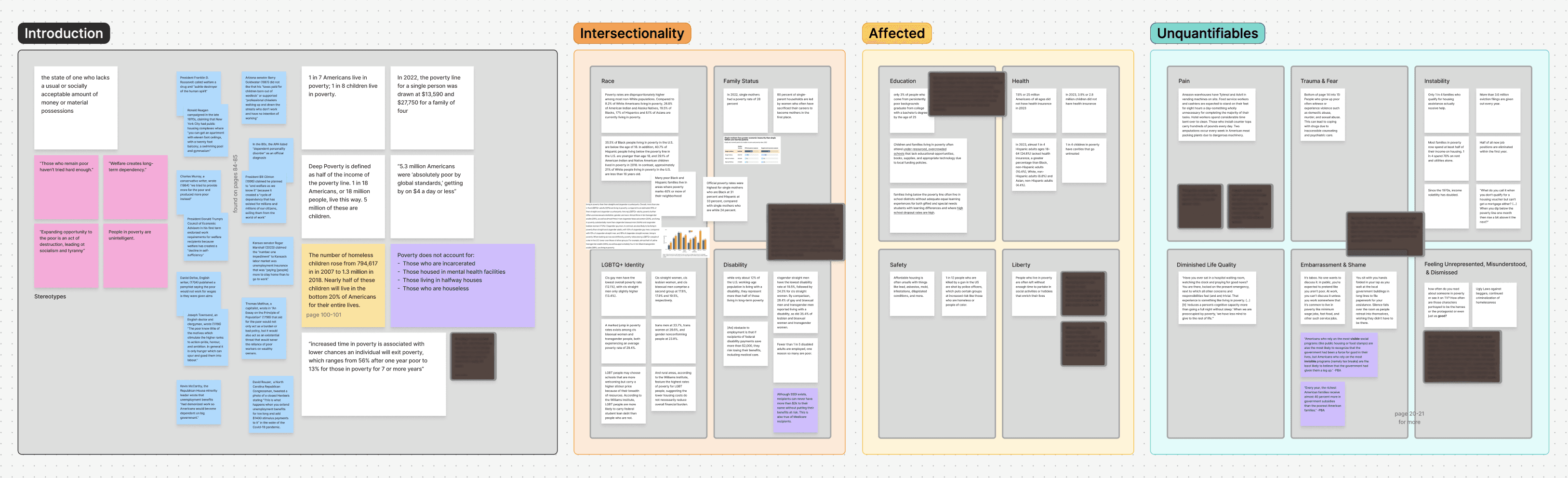
Poverty's history and modern presence have deep nuance. No two instances of poverty look the same. Circumstances can be dependent upon location, family status, medical history, race, gender, sexuality and other demographics.
Poverty, by America is a modern day book written by Matthew Desmond, a sociology professor at Princeton University. This book provides real-life examples, simple statistics, and comprehensive views about why stereotypes about impoverished communities and people are inaccurate and over-simplified to create and perpetuate biases.
Despite the book's insight and clarity, a major hurdle for many people is literacy. More than half of Americans cannot read above an elementary or middle school level. This leaves them unable to access this information and break the cycle of misinformation.
PRIMARY RESEARCH
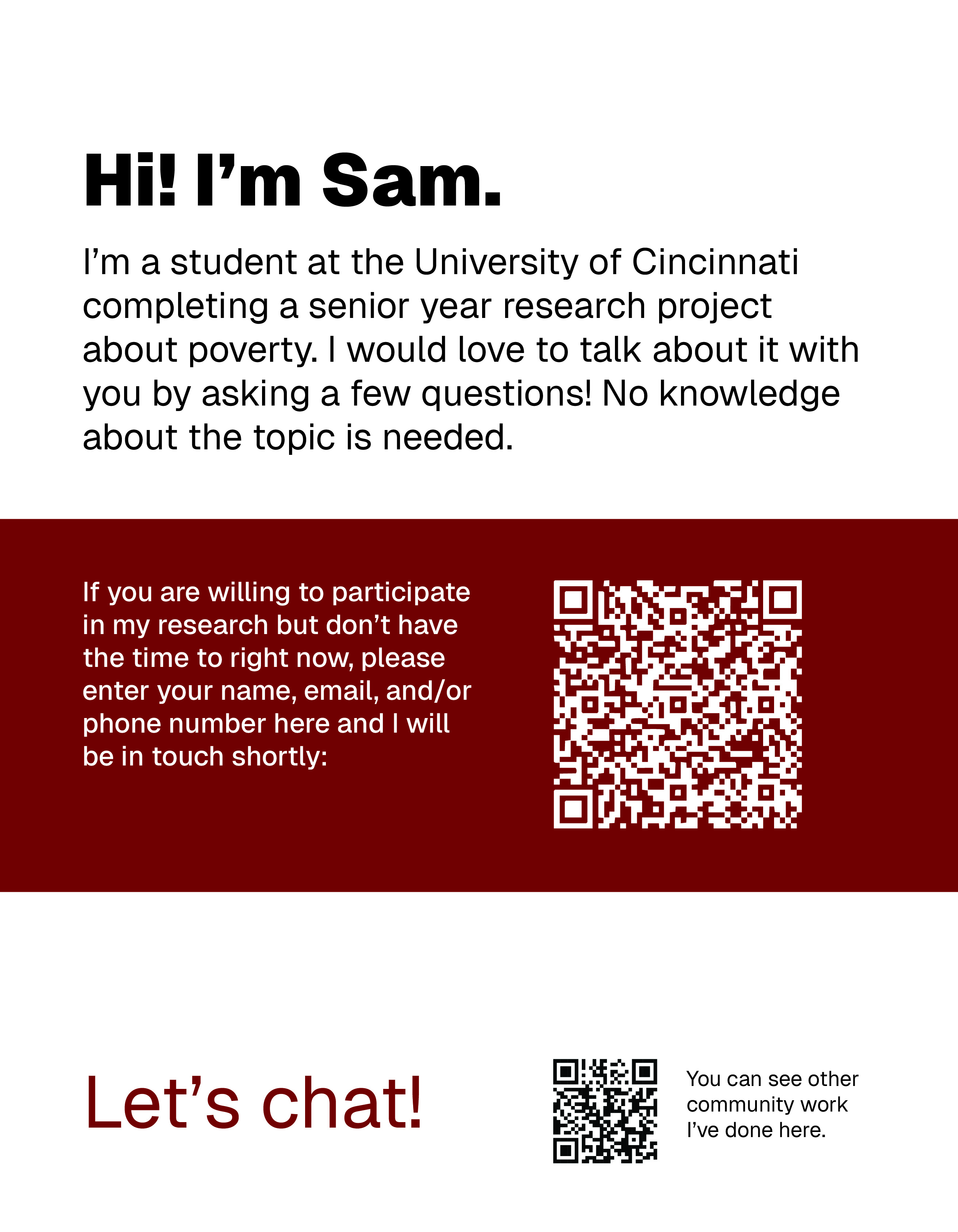
I wanted to understand what locals in Goshen, Ohio knew about this topic. I contacted a community-centered café to host interviews and conversations with their customers and gauge comprehension.
This was both unsuccessful and crucial to my journey.
When people recognized what my project was about, they avoided eye contact, walked the long way around the table to the other side of the café, or disengaged with the space altogether to take their orders to-go. Not a single person wanted to talk about poverty. The stigma was too great to even begin a discussion.
I reached out to locals who had lived in poverty to request an informal interview. One of these participants told me:
"There are countless misconceptions that stem from assumptions about our work ethic. There’s a story behind every person living in poverty, and many times it’s a generational cycle.”
EXPLORATION
I began to explore what this information may look like in a new book format, simplified and accessible.
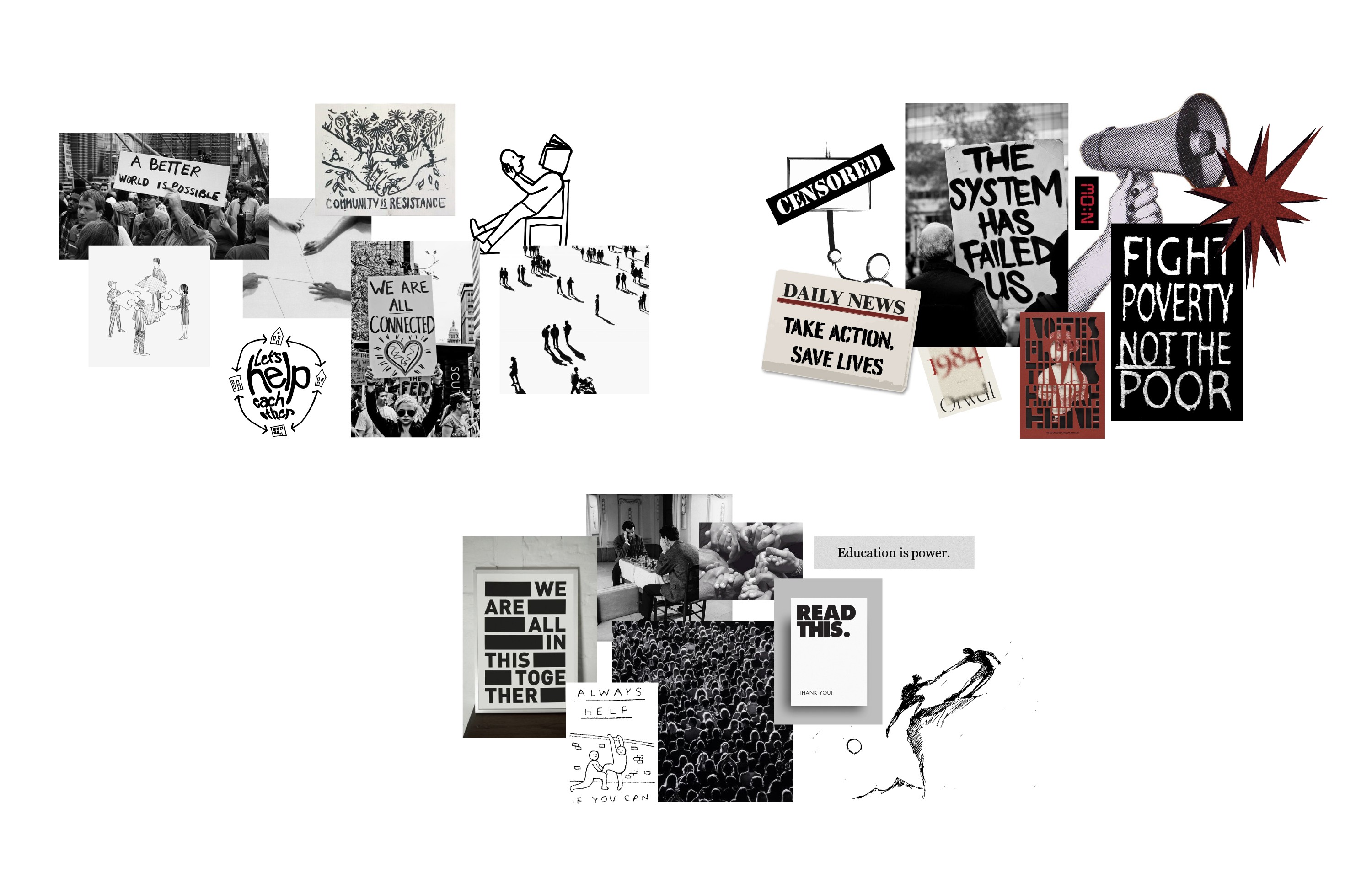
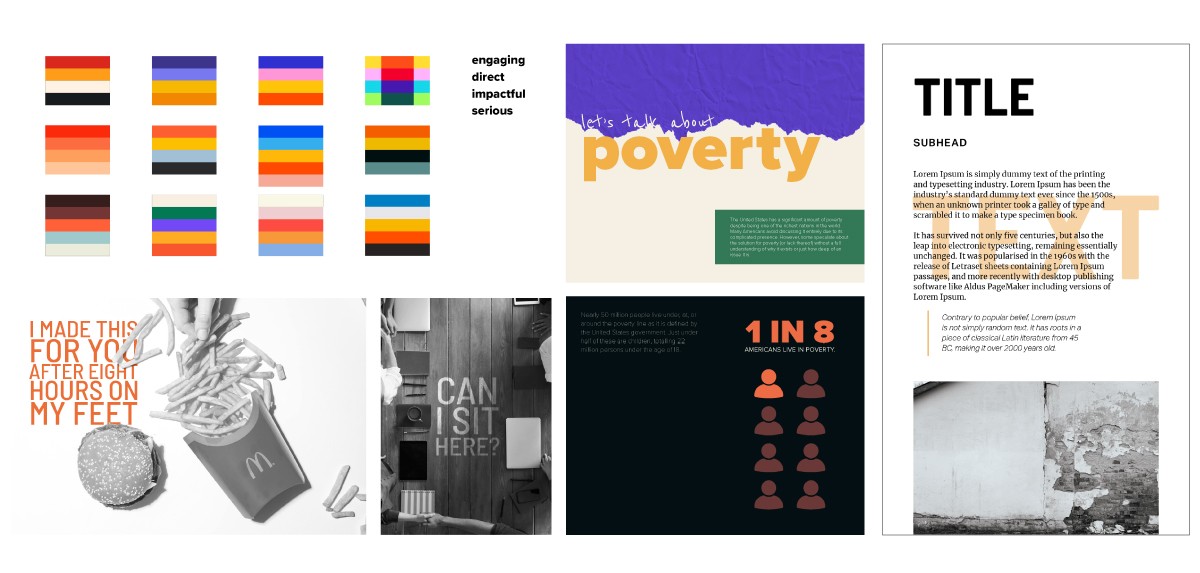
However, developing a brand that resonated with my audience was key. I conducted a series of user tests, asking participants to select which moodboard they felt would best reflect a brand focused on education that speaks in a firm but sensitive and sympathetic nature. Most participants referenced brands that achieve similar feats like non-profits they engaged with. I also discovered through this research that infographics and broken up information made the topic more digestible and less intimidating.
ChaNGING DIRECTION
I zeroed in on Goshen, Ohio. The nature of rural poverty was more familiar to me and seemed the best way to create an authentic deliverable.
With further testing, participants expressed that a book felt daunting and dense. Parsing the information into pieces was accessible and more approachable.
This caused me to rethink my project’s mode and application. Recalling that people had compared the “vibe” and communication style of my project to that of a non-profit, I reapproached the project from a new lense.
A non-profit could integrate with a community and partner with trusted places like the local library and café to draw curious locals in to learn in a supportive, non-judgemental space.
This brand needs to be adaptable to allow for updates to statistics as time and outcomes change. I began to imagine how the brand might exist in the world as a non-profit. I recounted discussions about color palettes during user testing to create a new look for the brand.
NON-PROFIT BRANDING
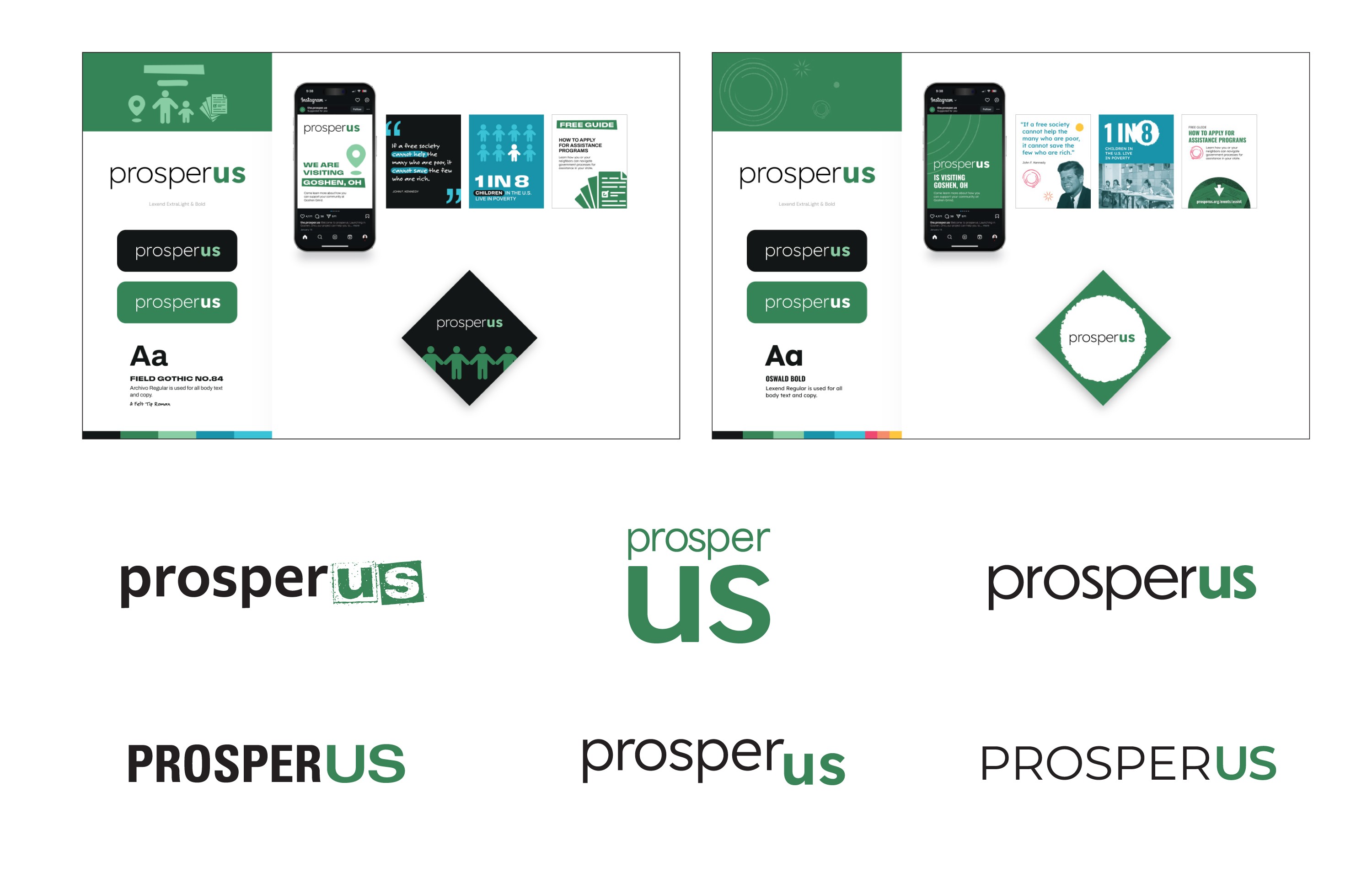
It was important that—while this brand would have a clear message in relation to politics and their effect on poverty—the brand did not feel political. The brand should feel trustworthy, educational, and serious but hopeful. It should feel community-focused. The tone should be conversational and confident.
After an exploration of logos, I developed a couple of sets of how type, image and/or graphics, and color worked together to become a brand that could live in social media and print. After critiques from peers and educators, I combined the two to create a cohesive brand that I moved forward with.
PROTOTYPING
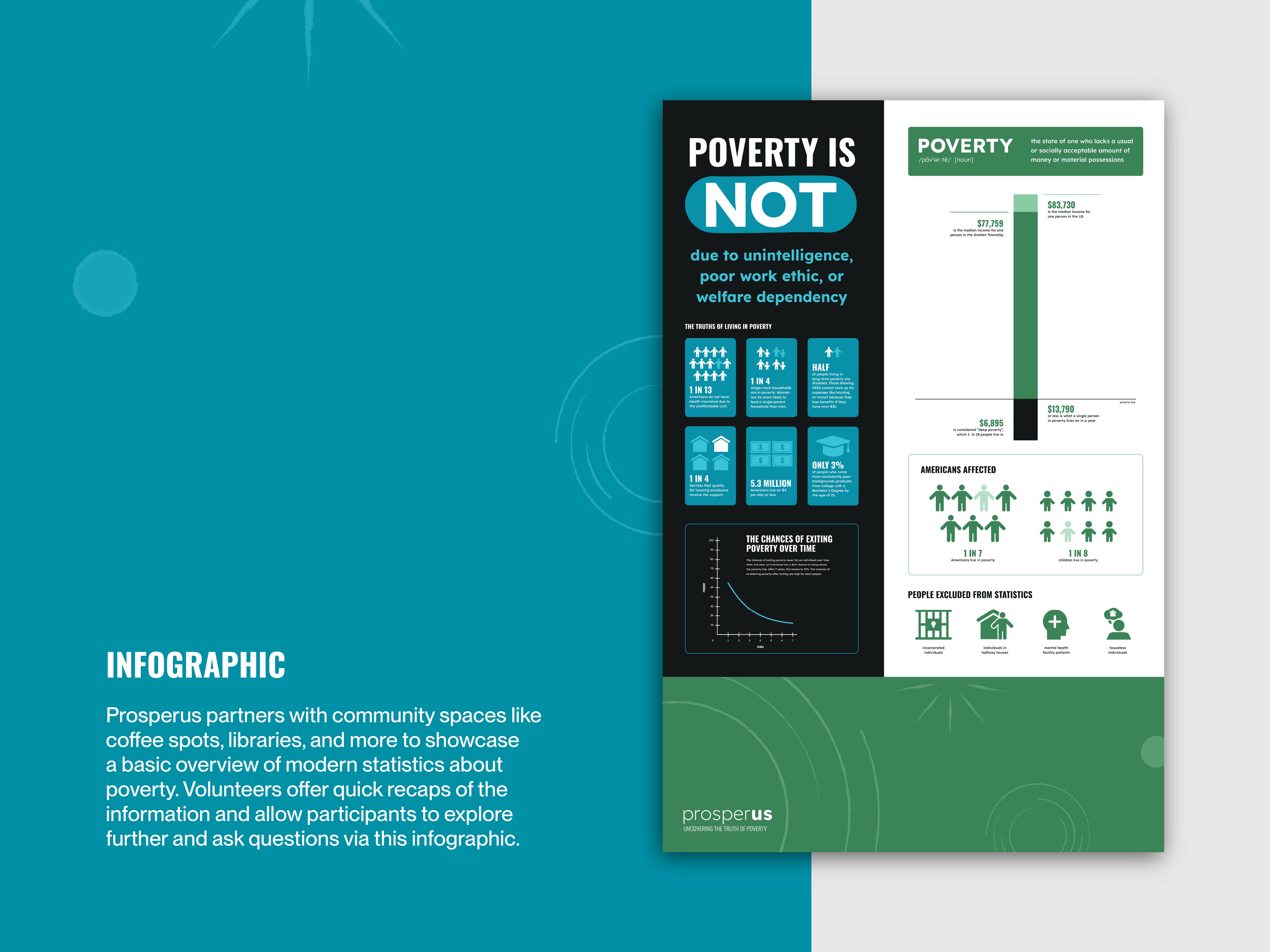
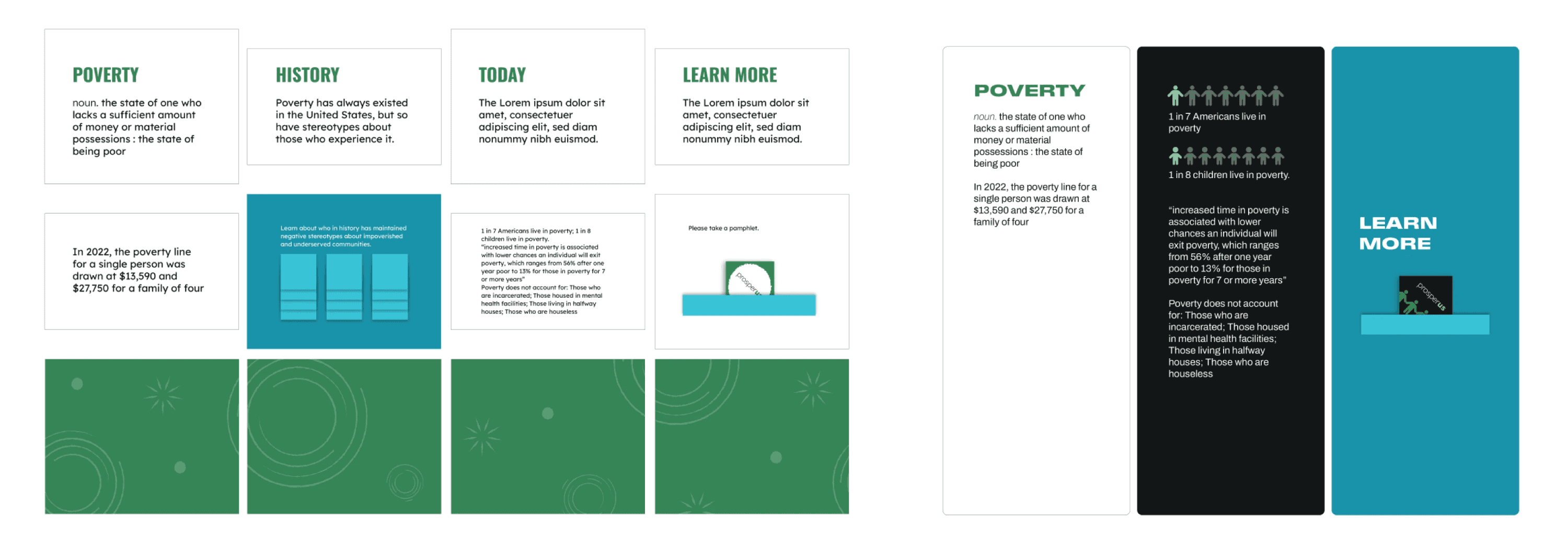
With a new direction, it felt appropriate that an infographic be used to replace the book and live conveniently in community spaces.
I began to imagine 3D experiences, but I quickly realized that a larger display may not fit well in smaller spaces like the local café. I pivoted to a smaller one-sided poster that would be easy for installation and storage.
The prototyping stage was an opportunity for me to test text sizes and which graphic treatments best fit the context of how this infographic would live. I also refined my messaging and writing style for the brand during this stage.
Final BRAND
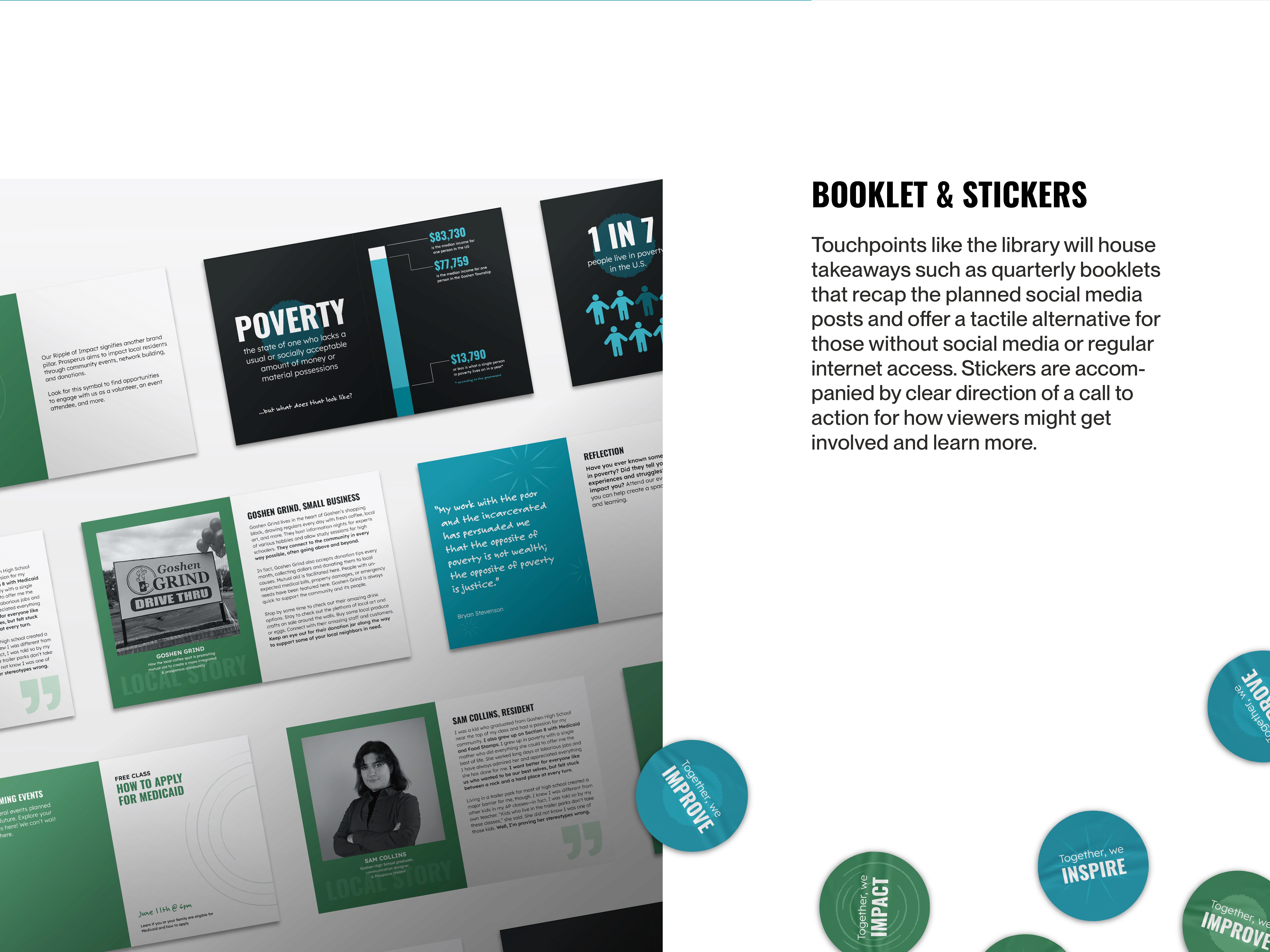
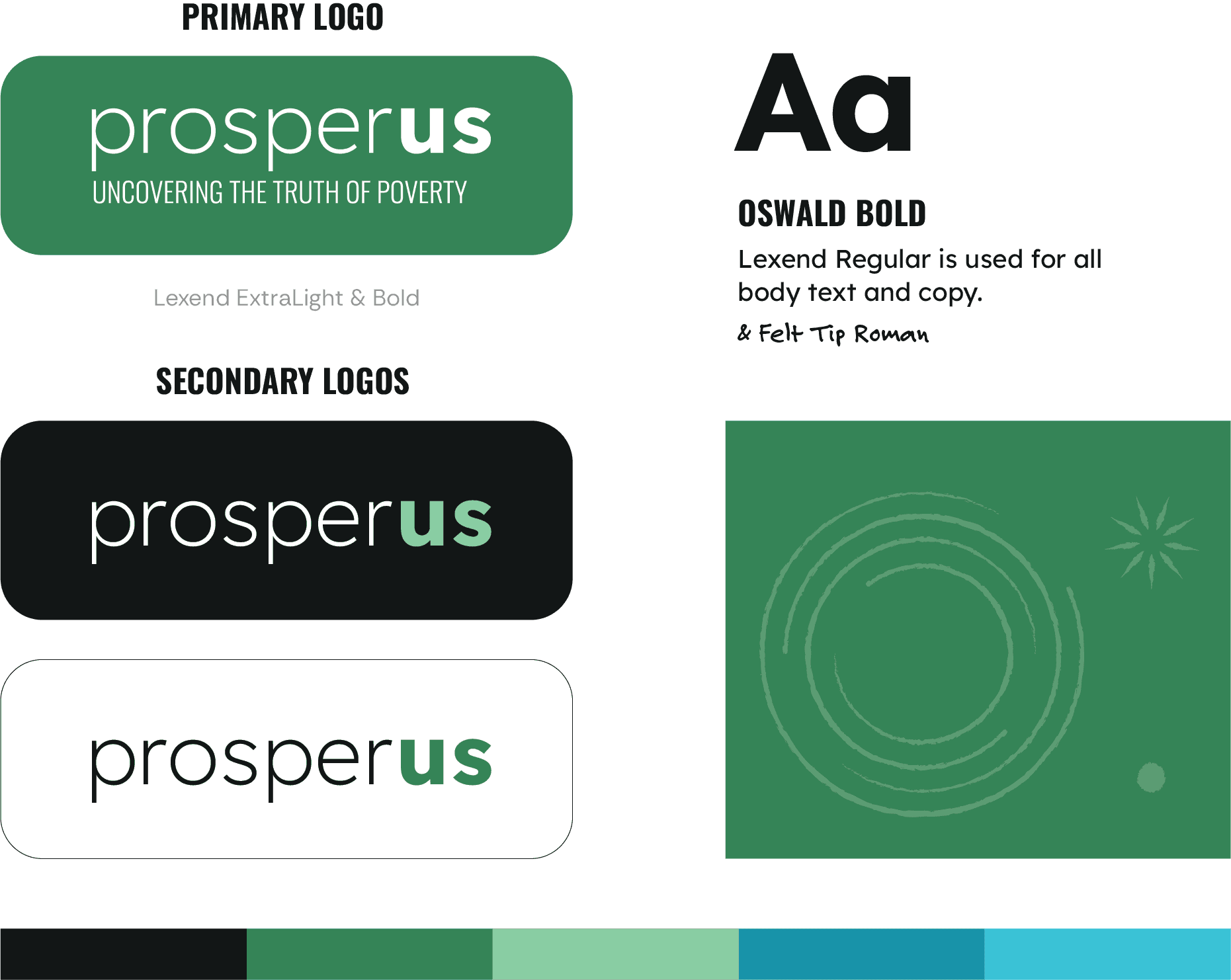
The brand includes a few hand-drawn elements that each signify a pillar of the brand goals.
Our Star-Burst of Inspiration
Prosperus aims to inspire local residents with literature and facts from our book club readings. This symbol is found with historical quotes and new perspectives, as well as suggested readings from our book club.
Our Ripple of Impact
Prosperus aims to impact local residents through community events, network building, and donations. This symbol is found with information about oppor-tunities to engage with us as a volunteer or as an event attendee.
Our Point of Improvement
Prosperus aims to make clear what modern statistics of poverty look like across the nation and locally. This symbol is found with ways viewers can support their neighbors and peers through community action, voting, and mutual aid.
The handwritten typeface is exclusively used when the brand is connecting with viewers and locals on a personal level such as inviting them to events, start-ing conversation, and introducing local stories about people or organizations that embody the spirit of the Prosperus brand.